 Save to Pinterest
 I first made this salad for my sister's baby shower three years ago, and I remember standing in the kitchen thinking about how to capture the sweetness of new beginnings on a plate. The soft pastels felt just right—not too bold, not too fussy—like the gentle anticipation of welcoming a new little one. That day, watching guests light up as they noticed the careful color arrangement, I realized that sometimes the most meaningful dishes are the ones that make people pause and smile before they even taste them.
I'll never forget my neighbor asking for the recipe after that shower, admitting she thought I'd hired a caterer. There's something special about food that doubles as art—it makes people feel celebrated before they even sit down to eat. That moment taught me that hospitality isn't always about complexity; sometimes it's about showing someone they're worth the thoughtful arrangement.
Ingredients
- Baby butter lettuce or mixed baby greens (4 cups): The tender, delicate base that won't overpower the subtle flavors of the fruit and cheese. Baby greens bruise easily, so handle them gently and dress just before serving to keep them fresh and crisp.
- Watermelon radish (1 cup, thinly sliced): This is your showstopper pink element—slice it paper-thin on a mandoline if you have one, and do it just before assembling so the color stays vibrant and the texture stays crisp.
- Pink grapefruit segments (1 cup): Fresh grapefruit brings a subtle tartness that balances the sweetness of the other elements. If you use canned, drain them well and pat dry so excess liquid doesn't make the salad soggy.
- Strawberries (½ cup, thinly sliced): Choose ripe but still firm berries, and slice them just before serving to prevent oxidation and maintain that beautiful pink hue.
- Fresh blueberries (½ cup): These little gems provide both the blue palette color and lovely bursts of tartness. Rinse and dry them thoroughly so they don't release excess moisture onto the greens.
- Blue cheese (½ cup, crumbled): The creamy, tangy element that ties the whole salad together. A vegan blue cheese alternative works beautifully if you're accommodating dietary preferences, and honestly, sometimes I use both for a richer flavor.
- Yellow cherry tomatoes (1 cup, halved): Look for the sweetest ones you can find—taste them at the market if the vendor allows it. They should feel heavy for their size and have a faint fragrant smell near the stem.
- Yellow bell pepper (½ cup, diced): The crunch here is essential—it gives the salad textural contrast that keeps it interesting. Dice it into small, uniform pieces so it distributes evenly across the platter.
- Hard-boiled eggs (2, sliced): Optional, but they add protein and a lovely yellow element. I boil mine in salted water with a splash of vinegar to prevent that gray ring from forming and to keep the yolk bright.
- Extra virgin olive oil (3 tbsp): Use one you actually enjoy tasting, because it's a starring ingredient here, not just a supporting player. The delicate dressing needs a good quality oil.
- White balsamic vinegar (1 tbsp): This is the secret to keeping the dressing from darkening your beautiful pastel creation. Regular balsamic would turn everything an unappetizing brown, so don't skip this step.
- Honey (1 tsp): A whisper of sweetness to balance the vinegar. Warm it slightly before whisking if it's crystallized, or use agave syrup for a vegan-friendly option.
- Fine sea salt (¼ tsp): Season gently at first—you can always add more, but you can't take it out. Remember that the blue cheese is salty, so taste as you go.
- Freshly ground black pepper: Always grind it fresh right over the dressing—pre-ground pepper loses its brightness and vibrancy.
Tired of Takeout? 🥡
Get 10 meals you can make faster than delivery arrives. Seriously.
One email. No spam. Unsubscribe anytime.
Instructions
- Prepare your canvas:
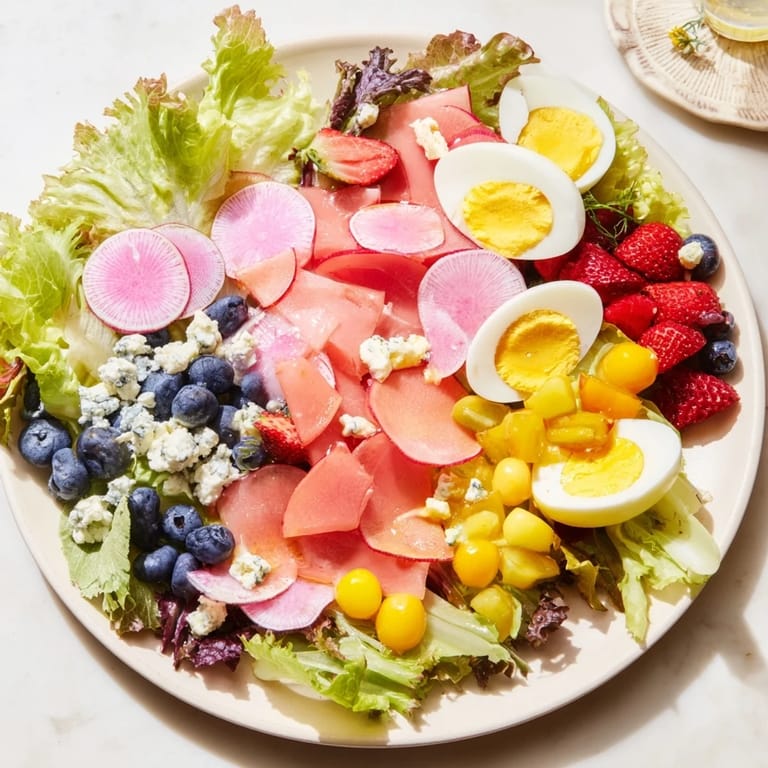
- Lay your baby greens across a large serving platter in an even, gentle layer. If you're using a platter that will sit out for a bit before serving, arrange the greens just before your guests arrive to prevent wilting. A shallow platter works better than a deep salad bowl because it lets all those pretty colors show from every angle.
- Scatter the pink palette:
- Now comes the fun part—arrange your watermelon radish slices, grapefruit segments, and strawberries across the greens in a loose, artistic pattern. Don't overthink it; think of it like painting a watercolor rather than following a blueprint. The beauty is in the organic placement, not rigid perfection.
- Add the blue accents:
- Distribute the blueberries and crumbled blue cheese in small clusters across the salad. These deeper colors will naturally draw the eye, so place them where you want people to look. The blue cheese should be scattered loosely, not pressed down, so it stays fluffy and visible.
- Fill with golden touches:
- Use the yellow cherry tomato halves, diced bell pepper, and egg slices to fill in any gaps and create a balanced, harmonious look. Arrange the egg slices in a gentle fan pattern if you're using them—it adds an elegant touch without being fussy.
- Whisk the dressing:
- In a small bowl, combine olive oil, white balsamic vinegar, honey, salt, and pepper. Whisk gently but thoroughly until the dressing becomes pale and slightly emulsified—you should see it turn just a bit cloudy. This takes about 30 seconds of steady whisking.
- The final reveal:
- Just moments before serving, drizzle the dressing over the salad in a light, even pattern. Use a spoon to let it cascade naturally rather than pouring it all in one spot. This is the moment when all those beautiful colors will glisten, and you'll know why you went to this effort.
- Serve with intention:
- Bring the platter to the table and let everyone admire it for a beat before serving. Food that's arranged with care deserves that moment of appreciation.
 Save to Pinterest
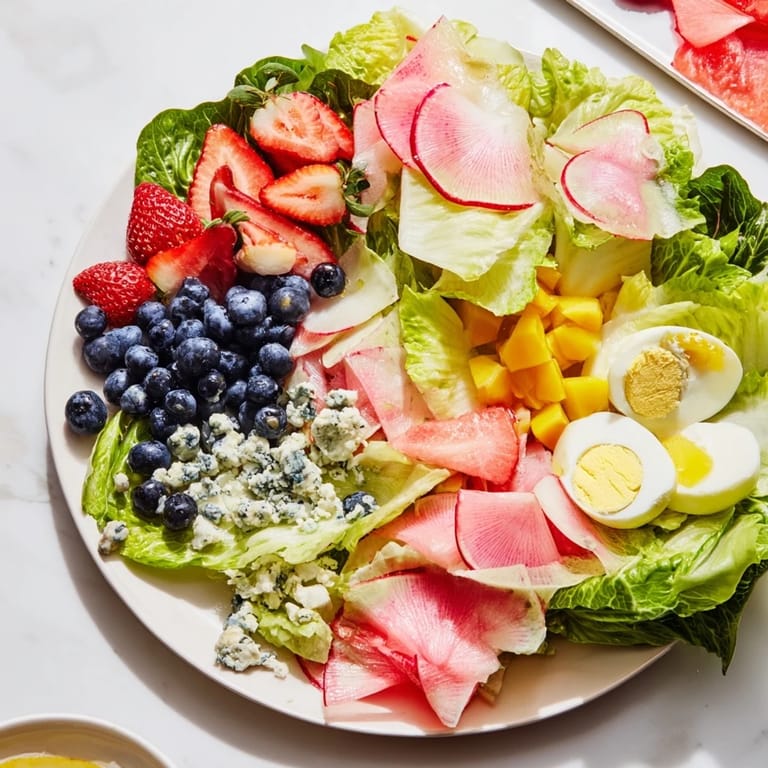
 The most memorable moment with this salad came when my friend's mother-in-law—who's never been warm to anyone—took a photo of it before eating and sent it to her whole extended family with the caption 'Now this is hospitality.' I got a text from someone I'd never met thanking me for thinking about aesthetics at her grandbaby's shower. That's when I understood that this salad is really about saying 'You matter enough for beauty.'
The Art of Color on a Plate
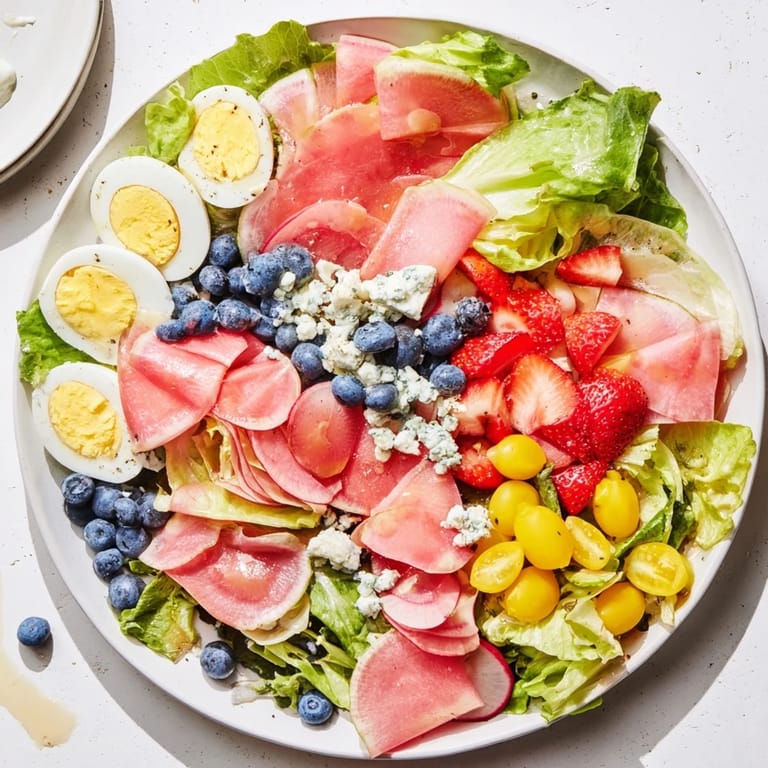
Building a salad with intention is different from just throwing ingredients together. The pastel palette works because each color has its own moment—the soft pink of watermelon radish doesn't fight with the blue cheese; instead, they create a quiet conversation. When you're arranging this salad, think about balance not just in nutrition, but in visual weight. The darker blue elements naturally anchor the plate, while the lighter pinks and yellows create movement. This isn't food styling magic; it's just thinking about where your eye travels when you look at the plate, and ensuring those travels feel pleasant and intentional.
Making It Your Own
While the pastel palette is part of the charm, you shouldn't feel locked into these specific ingredients if your market or preference calls for something different. I've made this with golden beets instead of watermelon radish, with mango cubes in place of some of the grapefruit, and even with white cheese crumbles when blue cheese wasn't available. The magic isn't in following a recipe exactly; it's in understanding why each color category matters and then choosing ingredients that speak to your celebration and your palate. What matters is that thoughtful arrangement and the fresh, light flavors you're building.
Pairing and Presentation
This salad shines alongside delicate proteins and isn't heavy enough to overshadow other dishes at a spread. I serve it with toasted brioche or thin crostini for textural contrast, and I've learned that sparkling rosé is its perfect companion—the bubbles keep everything feeling celebratory and light. If you're plating individual servings rather than presenting family-style, use a small handful of greens as your base and arrange ingredients in a slightly more composed way. The serving method should match your event, but the principle remains the same: take your time with the arrangement, and it will reward you with compliments.
- Consider making the dressing up to 2 hours ahead and storing it in a jar—a quick shake brings it back together perfectly.
- If you're transporting this to an event, keep components in separate containers and assemble on-site for maximum freshness and beauty.
- Always taste the dressing and adjust seasoning just before serving, as flavors can shift slightly as ingredients sit.
 Save to Pinterest
 This salad has become my go-to when I want to celebrate something or someone without overcomplicating the kitchen. It reminds me that sometimes the most generous gift we can give is simply our attention to detail and our willingness to make something beautiful.
Recipe FAQs
- → What greens work best for this salad?
Baby butter lettuce or mixed baby greens provide a tender and mild base that complements the pastel ingredients.
- → Can I make this salad vegan?
Yes, simply omit the eggs and replace blue cheese with a vegan alternative or skip the cheese altogether.
- → How do I prepare the dressing?
Whisk together extra virgin olive oil, white balsamic vinegar, honey or agave syrup, salt, and freshly ground black pepper until emulsified.
- → Are there ingredient substitutions for the yellow elements?
You can swap yellow cherry tomatoes with mango cubes or omit the eggs for variation and dietary preferences.
- → What is a good pairing beverage?
A sparkling rosé pairs beautifully, balancing the salad’s fresh and delicate flavors with a subtle fizz.
- → How should the salad be served?
Arrange the components on a large platter just before serving to maintain freshness and the visual pastel appeal.