 Save to Pinterest
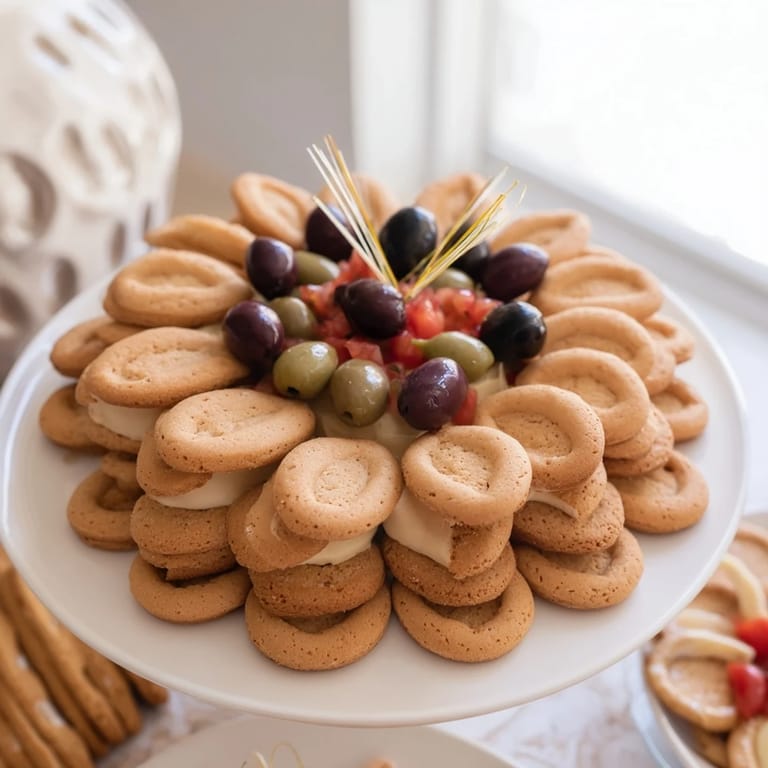
 I discovered this platter concept while daydreaming about a trip to Rome, honestly just staring at a photo of the Colosseum on my phone during lunch. Something about those concentric stone rings sparked an idea—what if I could recreate that iconic architecture on a serving board, but with food? The first time I actually assembled it was for a casual dinner party, and watching my guests immediately recognize the shape and start arranging crackers in circles alongside me turned what could have been a plain appetizer into this playful, interactive moment that somehow made everyone feel a little more connected.
My neighbor wandered over while I was setting this up and literally gasped when she saw the circular pattern taking shape. She pulled out her phone to photograph it before even tasting anything, which I found both funny and oddly touching—food arranged with intention hits differently. By the end of the evening, that platter had become the conversation piece, more memorable than any of the main dishes we'd prepared.
Ingredients
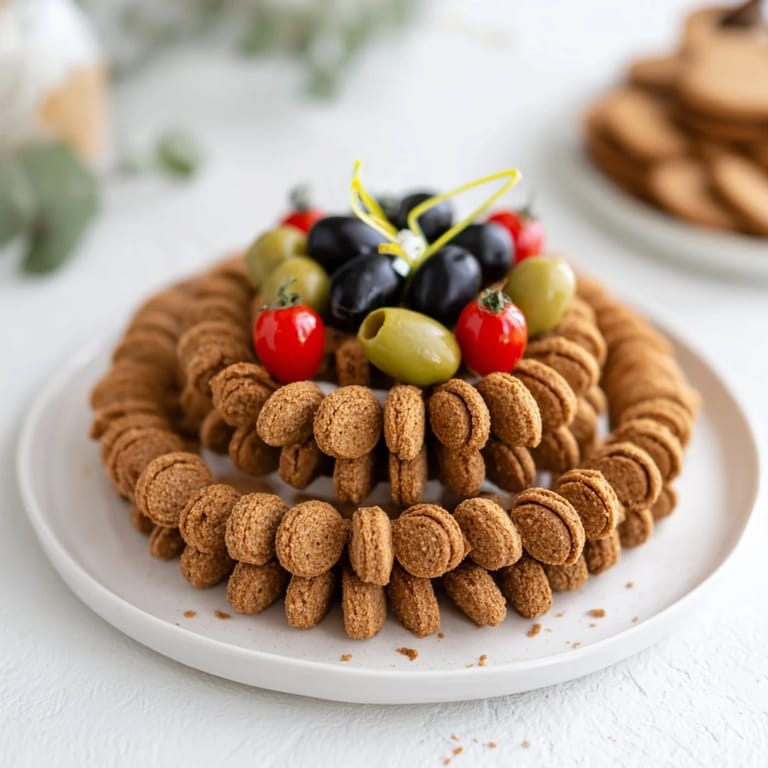
- Crackers: Use round or oval ones if you can find them—they stack better and actually look like those amphitheater rings. About 40 to 50 pieces gives you enough for two or three layers of concentric circles without gaps.
- Mixed Olives: A full cup pitted (roughly 150 grams of green and black together) creates that satisfying mound at the center. Pitting them beforehand is worth the five minutes because nobody wants a cracker shattering around a rogue pit.
- Fresh Parsley: Finely chopped and scattered over the olives, it adds freshness and a pop of green that makes the whole thing feel intentional, not accidental.
- Extra Virgin Olive Oil: Just a light drizzle—it's optional but it catches the light and makes those olives glisten in a way that feels almost theatrical.
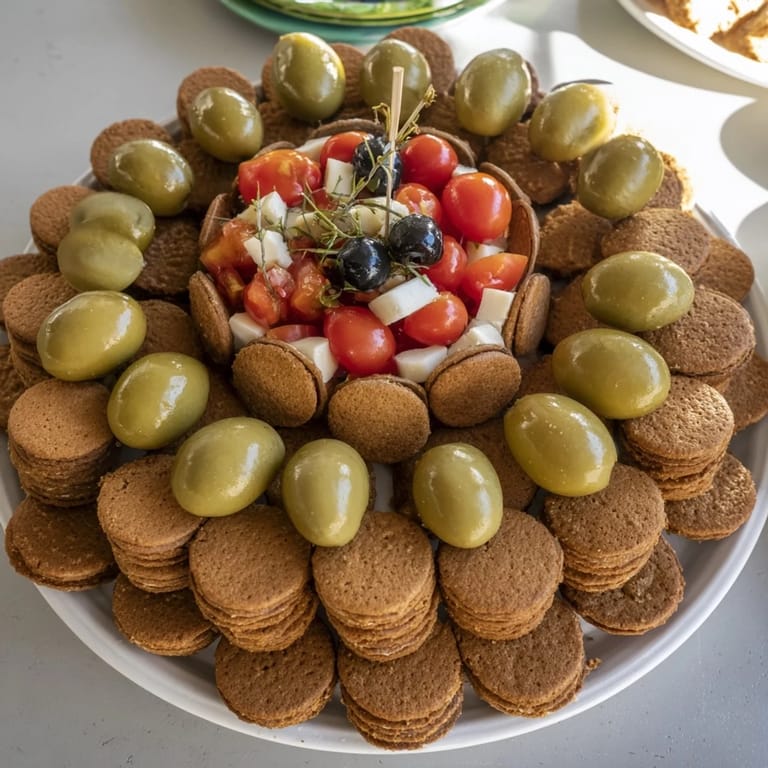
- Cheese and Tomatoes: Both entirely optional, but cherry tomatoes halved and dotted around the olives add color variation, and aged provolone or fresh mozzarella cubes give people extra flavor dimensions to explore.
Tired of Takeout? 🥡
Get 10 meals you can make faster than delivery arrives. Seriously.
One email. No spam. Unsubscribe anytime.
Instructions
- Find Your Arena:
- Choose a large, round serving platter or board—this is the foundation of the whole visual. If you have something with a nice rim or subtle texture, even better, because it frames the arrangement like the outer wall of the actual Colosseum.
- Build the Tiers:
- Start arranging crackers upright around the very edge of the platter, leaning them slightly inward or overlapping them just a touch. You're creating that sense of rising stone seats, so work your way inward in concentric circles, building two or three layers if your platter is large enough—think slow and intentional rather than rushing.
- Crown the Center:
- Pile the pitted olives in a generous mound right in the middle—this is your arena floor where the action happens. The contrast of the dark and green olives naturally looks like movement and drama.
- Add Your Optional Flourishes:
- Scatter cheese cubes and halved cherry tomatoes around the olive mound if you're using them, positioning them for both color balance and ease of grabbing.
- Finish and Serve:
- Sprinkle the parsley over the olives and give everything a subtle drizzle of olive oil if you're in the mood. Bring it straight to the table while the arrangement is still fresh and composed—people appreciate seeing it intact before it becomes the fun, chaotic center of the gathering.
 Save to Pinterest
 There's something quietly satisfying about creating something beautiful with such humble ingredients, watching people's faces light up with that moment of recognition when they realize what they're looking at. It felt less like I'd made an appetizer and more like I'd invited everyone into a little inside joke about architecture and appetite.
Why This Works as a Party Centerpiece
The genius of this platter is that it solves a real hosting problem—how do you make something feel special without spending hours in the kitchen? It's also inherently social, because people don't just grab and go; they pause to admire the arrangement first. The circular geometry draws the eye naturally, and there's something about tiered, concentric patterns that our brains find deeply satisfying, even if we can't quite explain why.
Playing with Variations
If you want to switch things up, breadsticks work beautifully in place of crackers and give you a taller, more dramatic effect. Crostini add a heartier crunch, though they're slightly more work since they require toasting. For vegan gatherings, skip the cheese entirely or try a cashew-based aged cheese alternative, which honestly holds its own in flavor. Gluten-free crackers exist and work just fine, though your selection at the store might be more limited so scout ahead if that's a concern.
Pairing and Serving Suggestions
Bring this out before heavier appetizers, when palates are fresh and people are still gathering. It pairs naturally with a crisp Italian white wine—Pinot Grigio or Vermentino feel right—or sparkling water with lemon if you want to keep things nonalcoholic. The beauty of olives and crackers is that they don't compete with anything else on your spread; they sit nicely alongside cheese boards, cured meats, or roasted vegetables without demanding dominance.
- Arrange it about 15 minutes before guests arrive so it looks composed and intentional when they first see it.
- Keep tongs or toothpicks nearby if you think people might be hesitant to dive in with their hands, though honestly most people embrace the interactive spirit once someone else breaks the ice.
- If the olives start looking a little sad after 45 minutes of sitting out, they're still perfectly fine to eat, but you might give them a gentle stir to freshen the arrangement.
 Save to Pinterest
 This platter reminds me that sometimes the most memorable dishes aren't the complicated ones—they're the ones that make people smile and interact with their food in a new way. Make it, own the fun of it, and watch how something so simple becomes the moment everyone remembers.
Recipe FAQs
- → What type of crackers work best for this platter?
Round or oval crackers are ideal for creating the concentric circle effect. You can also use breadsticks or crostini for variety.
- → Can I make this platter gluten-free?
Yes, simply substitute the crackers with gluten-free alternatives to maintain the structure and flavor.
- → What olives are suitable for the centerpiece?
A mix of green and black pitted olives offers both color contrast and a balanced flavor profile.
- → Are there optional ingredients to enhance the platter?
Adding cubed aged provolone or mozzarella cheese and halved cherry tomatoes around the olives boosts both visual appeal and taste.
- → How should this platter be served?
Serve immediately on a large round board or platter, arranging crackers upright or slightly overlapping to mimic an arena’s tiers.
- → Is this suitable for vegetarian diets?
Yes, all core ingredients are vegetarian, though cheese can be omitted or replaced to accommodate vegans.