 Save to Pinterest
 There's something about late afternoon light that makes everything taste better. I discovered this while sitting on my neighbor's patio one August, watching her arrange a simple board of cheeses and vegetables like she was composing a painting. The way the feta caught the sun, the crisp snap of cucumber between my teeth—it felt like the Mediterranean had somehow fit itself onto a wooden platter. That moment taught me that the best mezze isn't about complexity; it's about restraint, space, and letting each ingredient breathe.
I made this for the first time when my sister texted me an hour before she arrived, saying she was bringing her new partner over. Panic set in until I remembered that patio board, and suddenly I had something that looked intentional and inviting without any stress. We ended up sitting there until the sun went down, just talking and picking at things, and I realized that sometimes the most memorable meals are the ones where the food gets out of the way and lets people connect.
Ingredients
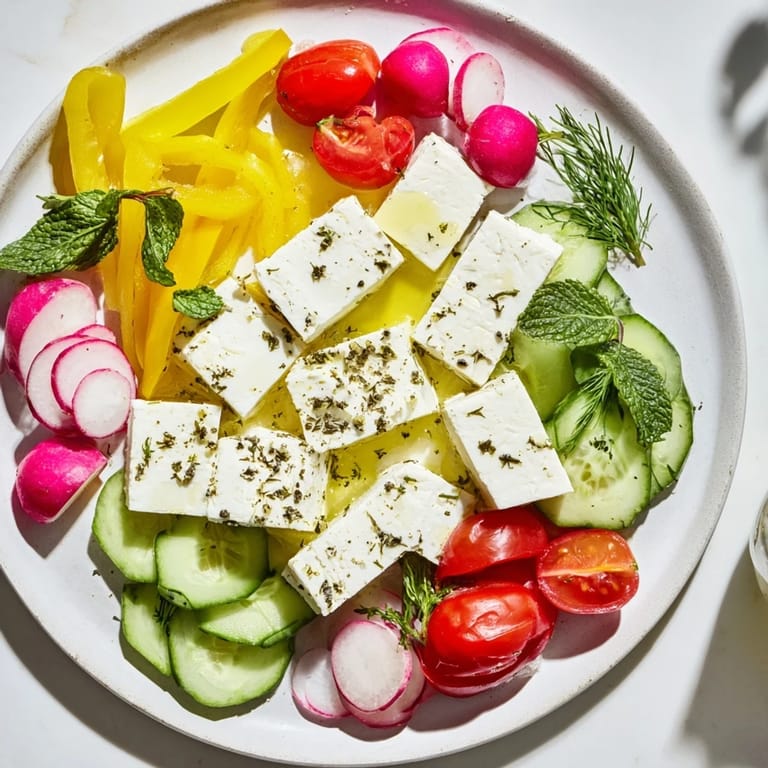
- Feta cheese: The salty, tangy anchor of the whole thing—buy it in blocks and cube it yourself if you can, it holds its shape better than pre-crumbled.
- Fresh mozzarella balls: These should be as fresh as you can find them, delicate and barely held together, nothing like the dense mozzarella on pizza.
- Cucumber: The cooling element that makes everything feel lighter; slice it just before serving so it stays crisp and doesn't start sweating.
- Cherry tomatoes: Halving them looks more intentional than leaving them whole, and the cut surfaces catch the light and the dips.
- Bell pepper: Use yellow for the color story, but red or orange work just as well depending on what makes your platter sing.
- Red onion: Thinly sliced so it's sharp but not overpowering, adding a whisper of heat to every bite.
- Radishes: Their peppery crunch is what keeps this from feeling too soft; don't skip them.
- Kalamata olives: Briny and bold, they're the voice that says this is Mediterranean, not just a vegetable tray.
- Hummus and tzatziki: These should be good quality or homemade if you have time; they're the glue that holds the whole thing together.
- Extra virgin olive oil: Don't be shy with it, and taste it first to make sure it's one you actually like.
- Fresh mint and dill: The green that transforms this from lunch to something that feels like a celebration.
- Sea salt and cracked black pepper: Season boldly; this isn't the time for timidity.
Tired of Takeout? 🥡
Get 10 meals you can make faster than delivery arrives. Seriously.
One email. No spam. Unsubscribe anytime.
Instructions
- Start with the cheeses:
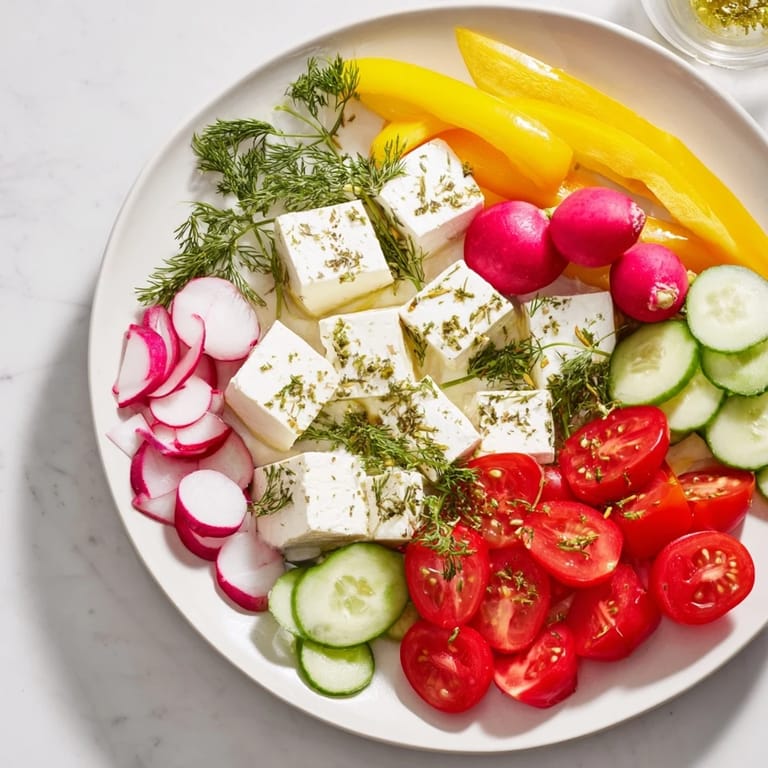
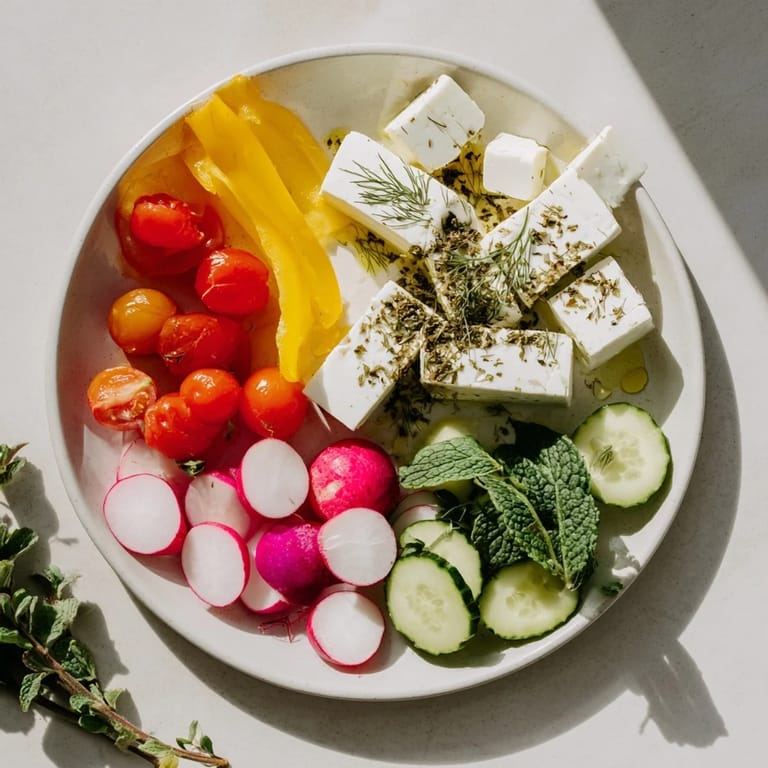
- Arrange the feta cubes and mozzarella balls in separate spots on your board, leaving white space around them like you're giving them room to breathe. This emptiness is what makes it feel generous, not crowded.
- Fan out the vegetables:
- Neatly arrange the cucumber, tomatoes, peppers, onion, and radishes in small clusters with air between each group. Think of it like a color story you're telling—let each vegetable have its moment.
- Nestle the olives:
- Put them in a small pile or bowl, somewhere they won't roll off the edges.
- Place the dips:
- Spoon hummus and tzatziki into small bowls and position them where they're easy to reach but not taking up prime real estate on the board.
- Finish with oil and seasoning:
- Drizzle the feta and vegetables lightly with olive oil, then sprinkle with sea salt and cracked black pepper. The oil should look like it's catching light, not pooling.
- Garnish like you mean it:
- Scatter fresh mint and dill sprigs across everything right before serving, so they're still perky and fragrant.
- Serve immediately:
- Bring it out with crispbreads or pita wedges on the side, and watch people's faces light up.
 Save to Pinterest
 I've learned that this board works at every gathering—the formal dinner, the casual afternoon, the one where people are still showing up and you're not sure how many to expect. It's the recipe that saved me when I had nothing in the fridge but made me look like I had everything planned perfectly.
The Art of Arrangement
The magic of a mezze board isn't really about the ingredients—it's about how you make someone want to reach for something. I used to pile everything together until a friend pointed out that a crowded board actually makes people hesitate. Now I arrange it like a landscape, with little peaks and valleys, colors that complement each other, and enough white space on the board that people feel invited to explore rather than overwhelmed by choice. It's the difference between looking at a menu and looking at a work of art.
Building Flavor as You Eat
One of my favorite things about serving a board like this is watching how people combine things—they're creating their own flavor journey with every bite. Some people make little sandwiches with pita, some dip the vegetables straight into tzatziki, others layer cheese and tomato and olives on a crisp. There's no wrong way, which is liberating for both you and your guests. I usually tell people to try a feta cube with a cherry tomato and a pinch of dill, just to point them toward one perfect bite, then let them go from there.
Wine, Seasons, and Timing
This board feels right alongside a cold glass of Sauvignon Blanc or a light rosé, something you can sip slowly while you graze. It's a warm-weather thing, born for patios and picnic tables and those evenings when nobody wants a heavy meal. In winter, I've done it indoors and it still works, though it hits differently—more of a bright spot in a cold day than a celebration of sun. The timing is flexible too; make it whenever you need something that feels intentional but doesn't require you to stand over a stove.
- If you're serving this before a dinner, keep portions light so people don't fill up completely.
- Have extra pita or crispbreads on hand; people always want more than you think.
- If you're making this ahead for a party, arrange everything except the final olive oil and herb garnish, then finish it 30 minutes before guests arrive.
 Save to Pinterest
 This is the board I reach for when I want to feed people without feeding them too much, when I want to create a moment that feels generous and unhurried. It's become the thing my friends ask me to bring.
Recipe FAQs
- → What cheeses are used in this mezze?
It includes cubed feta cheese and fresh mozzarella balls (bocconcini) for a creamy texture.
- → Can I make this platter vegan?
Yes, substitute the feta and mozzarella with plant-based cheese alternatives and ensure dips are vegan-friendly.
- → What vegetables are featured?
Sliced cucumbers, cherry tomatoes, yellow bell pepper strips, radishes, and thinly sliced red onion create a crisp, fresh mix.
- → How is the platter garnished?
Fresh mint and dill sprigs are added for a herbaceous, sun-kissed look alongside a drizzle of extra virgin olive oil.
- → What should I serve with this mezze?
Assorted crispbreads or pita wedges, preferably gluten-free if needed, complement the dips and vegetables well.
- → Are there any allergen concerns?
The platter contains dairy and potentially gluten if regular bread is used; check labels on hummus and tzatziki for sesame or other allergens.